929 is a legitimate New York area code, but that does not make every caller or text message trustworthy. The prefix is associated with New York City and nearby communities, while the person contacting you may be elsewhere or hiding behind a spoofed caller ID.
A local-looking number can belong to a genuine resident, company, temporary phone service, or scammer. Check the request, verify the sender through an independent channel, and avoid sharing passwords, one-time codes, banking details, or payment information before you know who is contacting you.
| 📌 | Key point |
|---|---|
| 📍 | Geographic status: 929 is associated with New York City and nearby communities. |
| 🕒 | Time zone: Published area-code references associate 929 with Eastern Time. |
| 🔁 | Overlay area code: 929 shares the broad New York numbering territory with 718, 347, 917, and 465. |
| ⚠️ | Caller ID limit: The displayed number does not prove where the caller is. |
| 🔒 | Safe response: Verify through an official website, app, statement, or known phone number. |
| 📣 | Reporting: Suspicious fraud can be reported to the FTC at ReportFraud.ftc.gov. |
Is the 929 Area Code Legitimate?
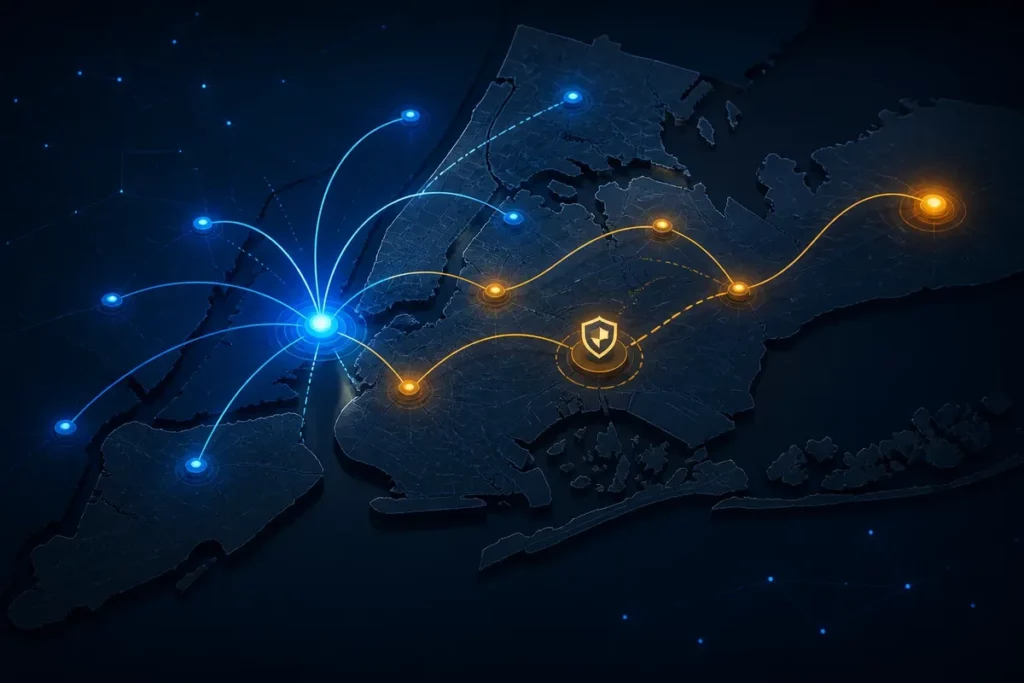
Or, yes: the 929 area code is a legitimate geographic code associated with New York City, including the Bronx, Brooklyn, Queens, Staten Island, and nearby communities. It was introduced on April 16, 2011, as an overlay for established New York numbering areas. The code itself is valid.
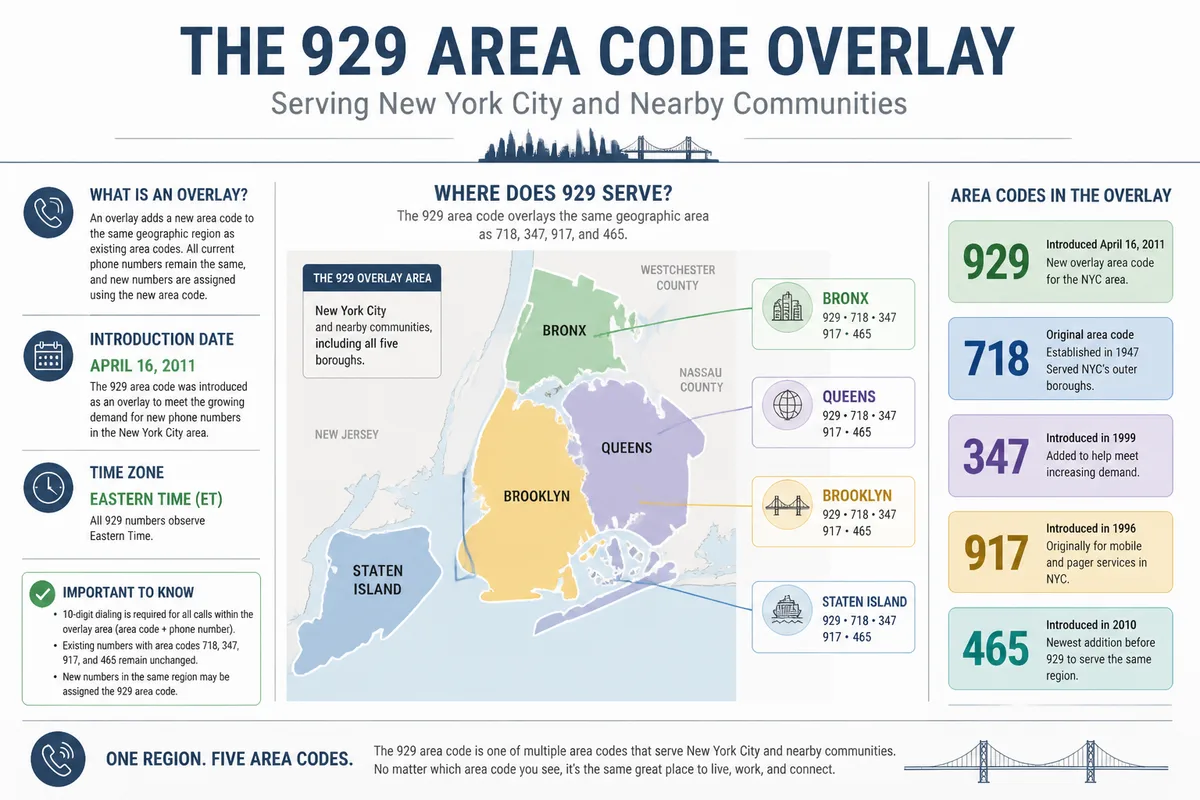
Or, published references commonly place 929 alongside 718, 347, 917, and 465 in the same broad New York numbering region. The exact geographic description varies by source because some references list boroughs while others include nearby communities.
Most references associate 929 with Eastern Time. Short answer: the prefix is real.
That fact answers only the numbering question. It does not authenticate a person, organization, payment request, or text-message link.
What Does a 929 Caller ID Prove?
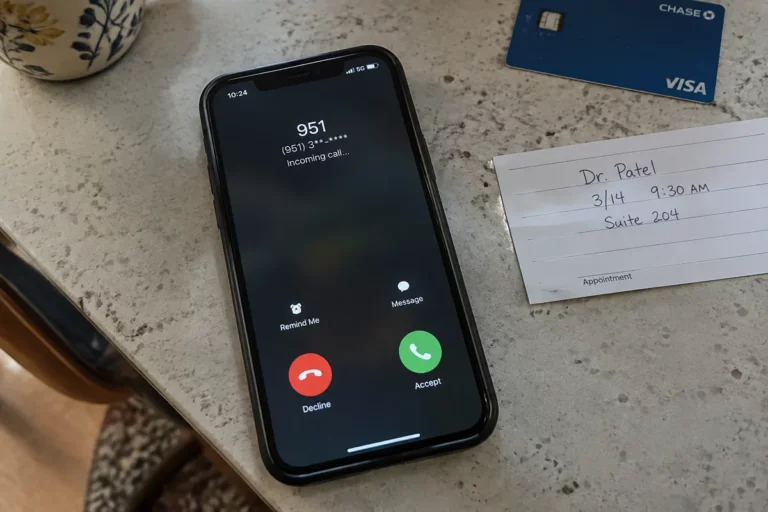
Or, a 929 caller ID proves only that a 929 number was presented to your phone. Caller ID can be manipulated, transferred, routed through internet calling services, or used by someone who is not physically in New York, so the prefix cannot establish identity.
A local-looking number is a weak safety signal. Scammers use familiar area codes because recipients may be more likely to answer or call back.
Or, the displayed name, company logo, or text signature adds context rather than independent proof. A fraudster can imitate those details in a message or use a number that resembles a real business line.
- A legitimate 929 number can be used by an individual, business, public service, or temporary phone provider.
- An illegitimate caller can display a 929 number through spoofing.
- A number-search result may identify reports, but it cannot confirm the current owner.
- A plausible story still requires independent verification.
The useful distinction is simple: 929 is a legitimate area code, while an unknown caller using 929 remains unverified until the claim checks out through a trusted channel.
How Can You Check an Unexpected 929 Call?
Or, let an unexpected call go to voicemail, examine the request, and verify the organization through contact details you find independently. Do not use a phone number supplied by the caller when the conversation involves money, account access, identity documents, or a security code.
Start with the request itself. A demand for immediate payment, secrecy, remote access, or a one-time code deserves no trust.
Or, ask for the caller’s full name, department, organization, reference number, and reason for contacting you. Then end the call and locate the organization’s official website, account portal, statement, or published support number yourself.
Use this sequence:
- Recognize the contact: decide whether you expected the call and whether the story fits a real event.
- Pause the interaction: refuse pressure to act while still on the unsolicited call.
- Verify independently: contact the claimed organization through a known channel.
- Confirm before acting: check the amount, account, deadline, and recipient separately.
Never read a password or one-time passcode aloud. Do not install software because an unknown caller tells you to. A real organization can be contacted again through its official channel.
How Should You Check a 929 Text Message?
Or, treat an unexpected 929 text as unverified until its sender, context, link, and requested action have been confirmed separately. Delivery notices, account alerts, job offers, prize messages, and payment requests deserve particular caution when they arrive without a related action from you.
Inspect the message before tapping anything.
- Look for a link that uses a shortened, misspelled, or unrelated domain.
- Check whether the message creates urgency or threatens account closure.
- Notice requests for card details, passwords, identity documents, or verification codes.
- Compare the message with your actual account activity.
- Contact the supposed sender through its official application or website.
Or, do not reply to confirm that your number is active when the message is clearly suspicious. Save a screenshot, preserve the sender details, and use your phone or carrier’s blocking and reporting features.
A text can look professional and still be fraudulent. The correct test is whether the claim survives independent confirmation.
What Does a 929 Number Cost to Call?
Or, the 929 prefix itself is not identified in the supplied references as a premium-rate code. The actual cost depends on your operator, plan, destination, roaming status, and whether the number is being dialed as a domestic United States call or from another country.
Check the number format before calling back.
Or, a United States number may appear with the +1 country code, while an unfamiliar international format can create different charges. A local-looking caller ID does not tell you what your own provider will charge for returning the call.
| Situation | What to verify | Practical decision |
|---|---|---|
| Domestic call in the United States | Your voice plan and any out-of-network conditions | Check the plan before returning an unknown call. |
| Call from abroad | International dialing and roaming terms | Use your operator’s current tariff information. |
| Text with a link | Sender identity and destination domain | Use the official app instead of the link. |
| Payment request | Recipient, amount, and independent confirmation | Do not pay during the unsolicited exchange. |
For broader geographic details, including the relationship between neighboring New York prefixes, see these 929 area code location details. The code’s geography still does not validate a specific caller.
Reported Spam Patterns: What Can the Numbers Show?
Or, complaint statistics can reveal recurring themes, but they cannot classify every 929 call. One published estimate associated medical and prescription offers with about 10.81% of cited 929-related call categories, impersonation with 9.01%, debt reduction with 5.59%, lottery or prize offers with 2.88%, and warranty or protection plans with 1.62%.
Those percentages belong to the cited research and its unspecified period. They are not current nationwide rates.
Or, a report measures what people submitted to a particular dataset, not every call received by every 929 subscriber. The sample may reflect reporting habits, collection methods, duplicate complaints, and the date on which the data was gathered.
That is why the prefix should not be labelled a spam area code. A reported scam involving one number establishes a warning about that communication, not a verdict on all numbers sharing the prefix.
What Should You Do After a Suspicious 929 Call or Text?
Or, stop the interaction, preserve the evidence, and verify the claim before taking action. If the sender cannot be authenticated through an independently found channel, block the number and report the communication rather than trying to negotiate with it.
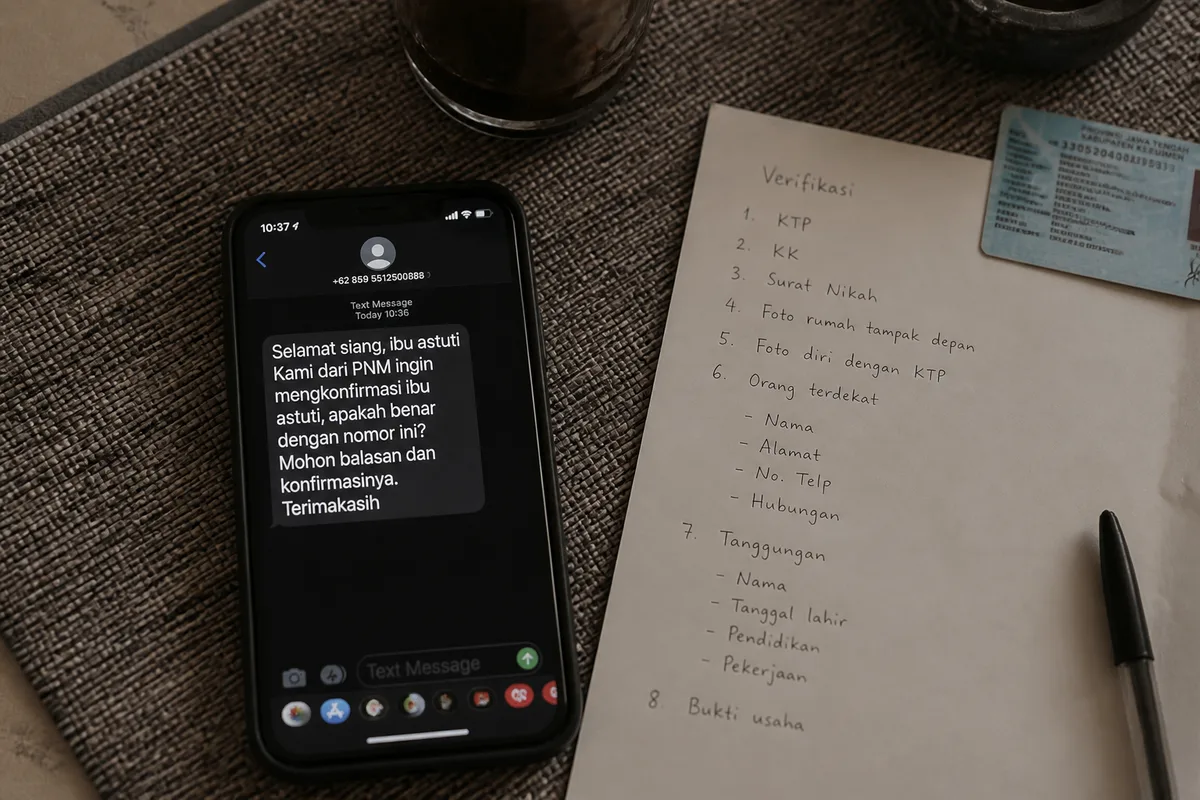
Keep the call log, message, sender number, payment instructions, website address, and screenshots. These details help your bank, carrier, platform, or law-enforcement reporting channel understand what happened.
- Contact your bank immediately through the number on your card if payment details were exposed.
- Change a compromised password from the official account portal.
- Ask your mobile operator about blocking, filtering, or reporting options.
- Report fraud or an illegal commercial practice to the FTC through ReportFraud.ftc.gov.
Or, do not call back merely because the number looks local. A safe response is to verify first, then act only when the identity and request match independent records.
Common Questions About 929 Calls and Texts
Or, the 929 area code is legitimate, while an individual message using it may still be fraudulent. The answer to a specific call depends on the sender’s identity, the request, and the result of independent verification.
Is 929 a New York area code?
Yes. It is associated with New York City and nearby communities, particularly the city’s outer-borough numbering territory. References also associate it with the broader overlay group that includes 718, 347, 917, and 465.
Can a 929 number be spoofed?
Yes. Caller ID spoofing can make a call appear to come from a local 929 number even when the caller is elsewhere. Do not use the area code as proof of identity.
Should I call back an unknown 929 number?
No, not automatically. Check voicemail, search for the organization independently, and use a verified contact method before returning the call, especially when the message involves money or account access.
Is 929 a cell phone or landline?
The area code alone does not reliably identify the line type. Mobile, landline, internet-based, and other services can use numbering from the same geographic code.
Sources and Verification Points
Or, reliable verification starts with the organization that supposedly contacted you, your mobile operator’s tariff information, and the FTC reporting channel. Area-code references provide geographic context; they do not certify a caller.
- FTC, ReportFraud.ftc.gov: report fraud and illegal commercial practices.
- Your bank or card issuer: use the number printed on the card or shown inside the official application.
- Your mobile operator: confirm call charges, international dialing conditions, and blocking tools.
- Official account portal: check whether an alleged security alert or payment request actually exists.
For a new number, compare the contact details in more than one trusted record. If the caller’s story conflicts with the account, statement, or official website, end the exchange and report it.