4 area codes can now point to the same broad New York City numbering region: 718, 347, 929, and 465. The practical answer is simple: 718, 347, and 929 are established overlapping codes for the Bronx, Brooklyn, Queens, Staten Island, and Marble Hill, while 465 is the newer overlay assigned to new services after existing numbering resources are exhausted.
These prefixes usually change what a number suggests, not how a call works. This documentary comparison uses manufacturer- and carrier-published information, regulatory material, and published tests or reference data; the models of telephone service discussed here were not directly tested by this editorial team. The area code alone cannot verify a caller’s borough, current location, identity, or legitimacy.
| Area code | NYC coverage | Relationship | Practical meaning |
|---|---|---|---|
| 718 | Bronx, Brooklyn, Queens, Staten Island, and Marble Hill | Original outer-borough code | Established number in the shared region |
| 347 | Same broad overlay region | Overlay with 718 and 929 | Additional established numbering resource |
| 929 | Same broad overlay region | Overlay with 718 and 347 | Active NYC outer-borough number |
| 465 | Same region as 347, 718, 917, and 929 | New overlay | For new services after existing codes are exhausted |
| 917 | All five New York City boroughs | Citywide overlay | Useful context, although outside the requested four-code comparison |
| Calling rule | New York City numbering area | Overlay numbers share the same territory | Use the full area code and telephone number |
Which area code is different: 929, 718, 347, or 465?
718, 347, and 929 are active area codes assigned across the same New York City outer-borough region, while 465 is an additional overlay for that territory. The useful distinction is historical and operational: 718 is older, 347 and 929 expanded the numbering pool, and 465 supports future assignments.
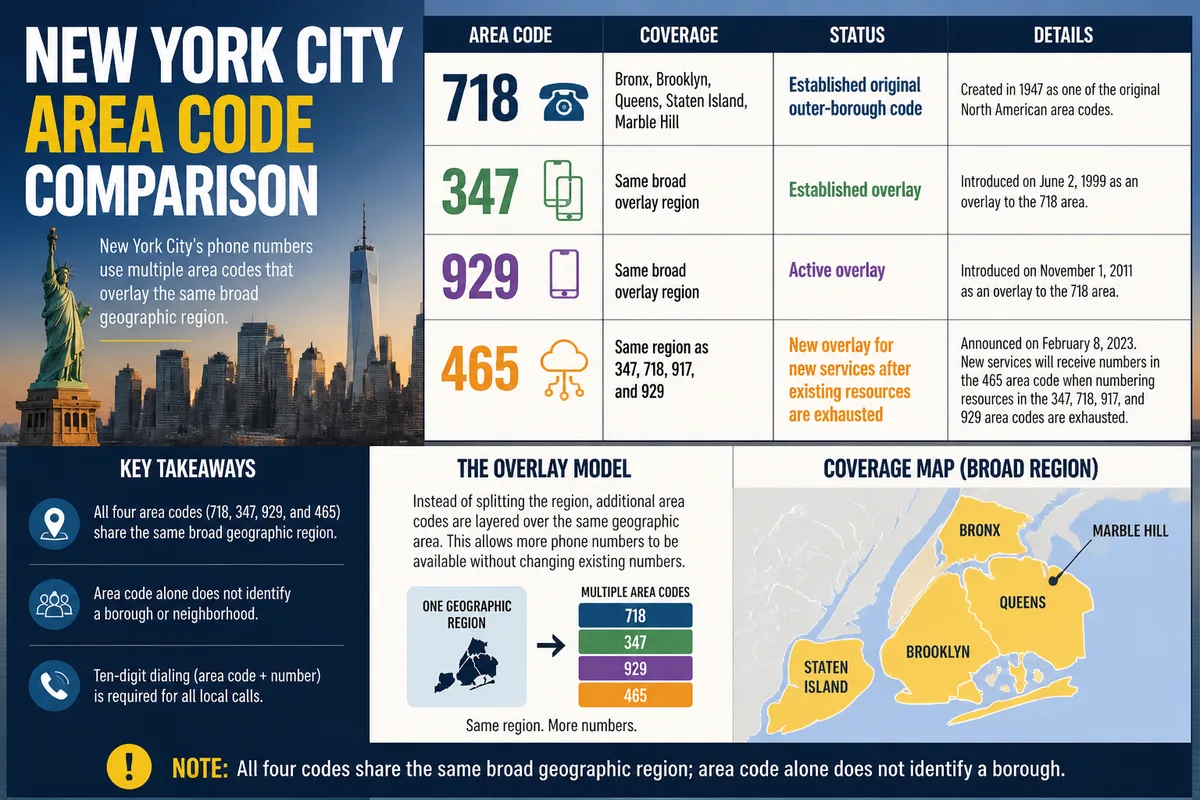
Now, 718 carries the strongest historical association with the outer boroughs. The code was created in 1984 during the first split from New York City’s 212 area code, although published references differ on whether they present only the year or the specific September 1 launch date.
That disagreement does not change the current comparison. 718 is an established code, not a separate service tier. It does not automatically indicate better coverage, an older resident, or a landline.
347 and 929 were added as overlays, meaning new numbers could be assigned in territory already served by another code. A number beginning with 929 therefore belongs to the same general numbering area as a number beginning with 718 or 347.
465 follows the same geographic logic. According to Verizon’s published notice, the code entered service on June 18, 2026, and is assigned to new services after the existing 347, 718, 917, and 929 resources are exhausted.
Where are the 929, 718, 347, and 465 area codes used?
The four codes serve the Bronx, Brooklyn, Queens, Staten Island, and the Marble Hill section of Manhattan. They do not divide those places into four exclusive maps, because 347, 718, 929, and 465 operate as overlapping numbering resources across the same broad region.
Now, the shared area includes four boroughs and a small Manhattan exception. Marble Hill is legally associated with Manhattan, yet the numbering complex commonly linked with 718, 347, 929, and 465 includes it.
Manhattan’s main numbering history is different. Published New York area-code information commonly associates Manhattan with 212, 646, and 332, while 917 serves all five boroughs, including Manhattan and the outer-borough overlay region.
The New York area-code reference from AT&T supports that broad distinction, while the New York State Department of Public Service notice explains that calls between 465 and the existing New York codes remain local calls.
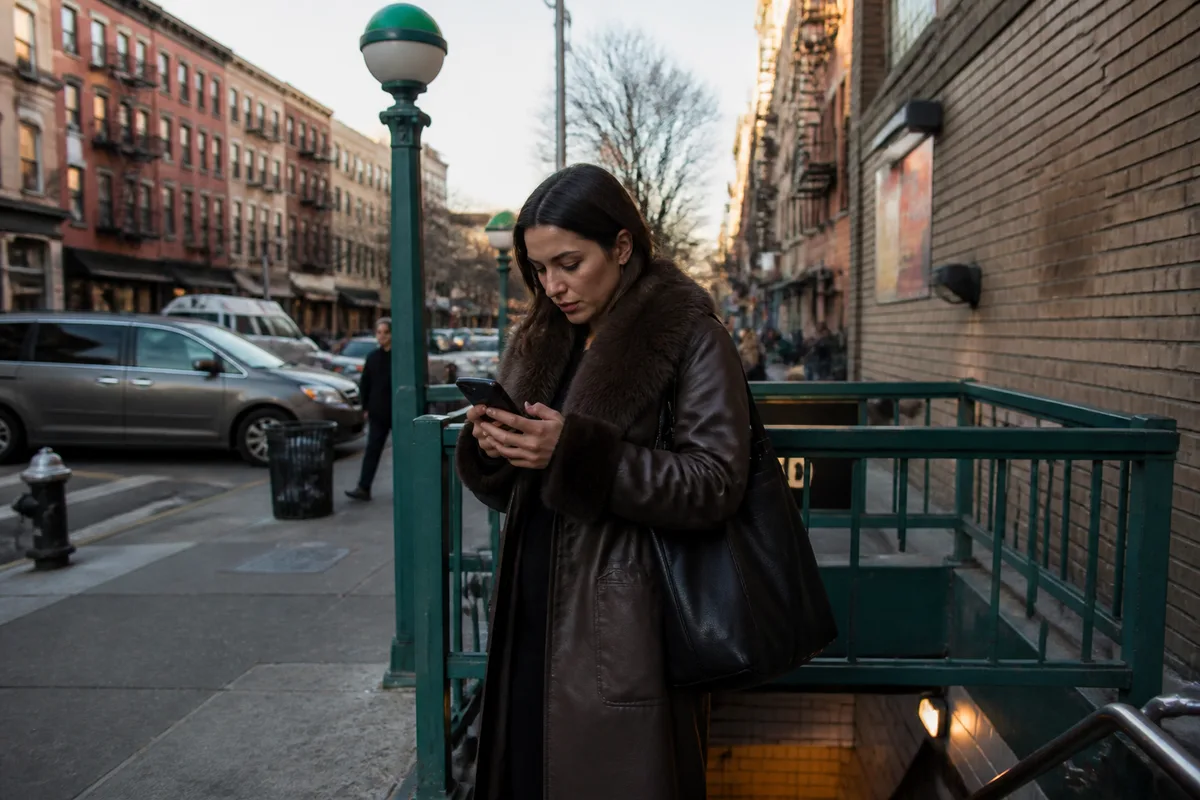
Look at the destination, not the label. A 929 call could involve Brooklyn, Queens, the Bronx, Staten Island, or Marble Hill; the prefix cannot narrow that list to one neighborhood.
Can an NYC area code identify the caller’s borough?
No. A 718, 347, or 929 number cannot reliably identify a current borough, and a future or active 465 number cannot establish a neighborhood either. Overlay assignment, mobile use, business lines, and number portability all weaken the connection between a prefix and a person’s present location.
Now, number portability is the decisive practical point. A person or company can keep a telephone number while changing carriers, moving within the region, or using the number through a mobile or internet-based service.
The area code identifies numbering history more reliably than physical location. That distinction matters when a caller claims to be nearby simply because the number looks local.
A 929 number is not a “farther” version of a 718 number. A 347 number is not tied to a newer neighborhood. A 465 number, once assigned, will not prove that the subscriber recently moved to New York City.
Readers who need the historical background can review this explanation of the 929 area code history, while a location lookup should still be treated as an indication rather than identity verification.
What number portability changes
Portability allows a subscriber to retain a number when service changes from one carrier to another, subject to the applicable service and transfer conditions. The prefix may therefore reflect where the number was originally assigned rather than where the device is now used.
- A mobile subscriber may use the number outside New York City.
- A business may keep a New York number while operating elsewhere.
- An internet-based line may route calls through a service platform rather than a local handset.
- A recycled number may reach a different subscriber than the original owner.
That is why a lookup result should not be treated as proof of residence. Verify the person through a separate, trusted channel.
What are the calling differences between these NYC area codes?
Calls between 929, 718, 347, and 465 use the same basic New York overlay logic: dial the complete area code and telephone number, then follow the carrier’s instructions about the leading 1. The prefix itself does not set call quality, mobile coverage, texting performance, or ordinary domestic pricing.
Now, New York’s overlay structure makes seven-digit local dialing unsuitable for ordinary calls in the shared region. The complete ten-digit number is the safe standard for calls within the North American Numbering Plan, while carrier instructions determine when 1 plus the ten-digit number is required.
For 465 specifically, the published implementation notice states that customers must dial 1 plus the ten-digit number for local and long-distance calls. Use the full number when calling any of these codes.
Calling cost is controlled by the caller’s plan, carrier, destination, and domestic or international status. A 929 number does not automatically cost more than a 718 number, and 465 does not create a special premium category merely because it is newer.
From outside the United States, the caller normally uses the international access procedure required by the originating country, followed by the United States country code and the ten-digit North American number. The exact access prefix belongs to the country and carrier making the call.
| Calling situation | What to enter | What controls the charge |
|---|---|---|
| Call within the NYC overlay region | Area code plus seven-digit number | Caller’s plan and carrier rules |
| 465 call under the published rollout guidance | 1 plus the ten-digit number | Carrier and destination terms |
| Call from abroad | International access code, US country code, then ten-digit number | International plan, roaming, and destination |
| Text message | Use the saved full telephone number | Messaging plan and network service |
Is a 929, 718, 347, or 465 call legitimate?
No area code makes a call trustworthy. A local-looking 929, 718, 347, or 465 number can belong to a genuine person, a business, a recycled subscriber, or a caller using spoofing, so the content and verification route matter more than the first three digits.
Now, spoofing can make the displayed caller ID resemble a familiar city or borough. The number shown on the screen may not be the number that actually originated the call.
Do not return an unexpected call to a bank, delivery company, government office, or employer using the displayed number. Find the organization’s number through a statement, official website, account portal, or previously trusted contact.
- Do not share one-time passcodes during an unsolicited call.
- Do not install software because a caller claims your phone is infected.
- Do not send money to “unlock” a package, account, or prize.
- Ask the caller to identify the organization, then verify it independently.
A short call is not automatically harmless. The risk comes from the requested action, urgency, payment method, and inability to verify the caller through a separate channel.
For a practical checklist, see this guide to checking whether a 929 call is legitimate; the same verification principles apply to 718, 347, and 465.
Which NYC area code should you expect on a call?
Expect 718, 347, 929, or 465 to identify the same broad outer-borough numbering complex rather than four separate locations. For historical context, 718 is the original established code; for existing numbers, 347 and 929 are ordinary overlays; for new service after exhaustion, 465 is the relevant newer assignment code.
Now, choose the interpretation that matches the use case. A local business may retain 718 for decades, a newer mobile line may use 929, and a newly assigned service may receive 465 without any change to the geographic territory.
| Use case | More relevant code or fact | Reason |
|---|---|---|
| Understanding historical NYC numbering | 718 | Created during the 1984 split from 212 |
| Identifying an existing outer-borough number | 718, 347, or 929 | All operate within the shared overlay region |
| Understanding the newest assignment resource | 465 | Used for new services after existing codes are exhausted |
| Finding the caller’s exact borough | None of these codes | Portability and overlays prevent reliable borough-level identification |
| Assessing a suspicious call | Independent verification | Caller ID and area codes can be spoofed |
718 suits historical identification, not a quality ranking. 929 suits recognition of an active outer-borough number, not proof of a current Queens or Brooklyn location.
465 suits the explanation of future or newly assigned services after the established code pool is exhausted. It does not replace existing numbers, alter local rates, or redraw the city map.
In this comparison, 718 is the right answer for history, 465 for the new-service rollout, and none of the four for proving who is calling.
How we compared the four area codes
This comparison uses geographic coverage, overlay status, introduction history, assignment rules, dialing requirements, and practical limits on location identification. The decisive evidence comes from published carrier and regulatory information available for 2026, with historical details kept separate from current service rules.
Now, the comparison does not rank one code as safer, faster, or cheaper. No verified evidence supplied for these options establishes a different call quality or standard domestic price based solely on the area code.
Check the current carrier instructions before changing a business phone system or international dialing procedure. The applicable rule is the one published for your carrier, service type, and calling country on the date of use.
What to remember
- 718, 347, and 929 overlap across the Bronx, Brooklyn, Queens, Staten Island, and Marble Hill.
- 465 is the newer overlay for the same broad region.
- An area code does not prove a caller’s current location or identity.
- Use the complete telephone number and verify unexpected callers independently.
The safest reading is geographic, not personal: a prefix can indicate a New York numbering area, while only independent verification can establish who is calling if a financial request or urgent claim appears in 2026.