1 simple formula covers many calls abroad from the US: dial + or 011, add the destination country code, then enter the local number. The destination may require a different treatment for a leading zero, area code, mobile number, toll-free service, or special number, so verify the complete international format before connecting.
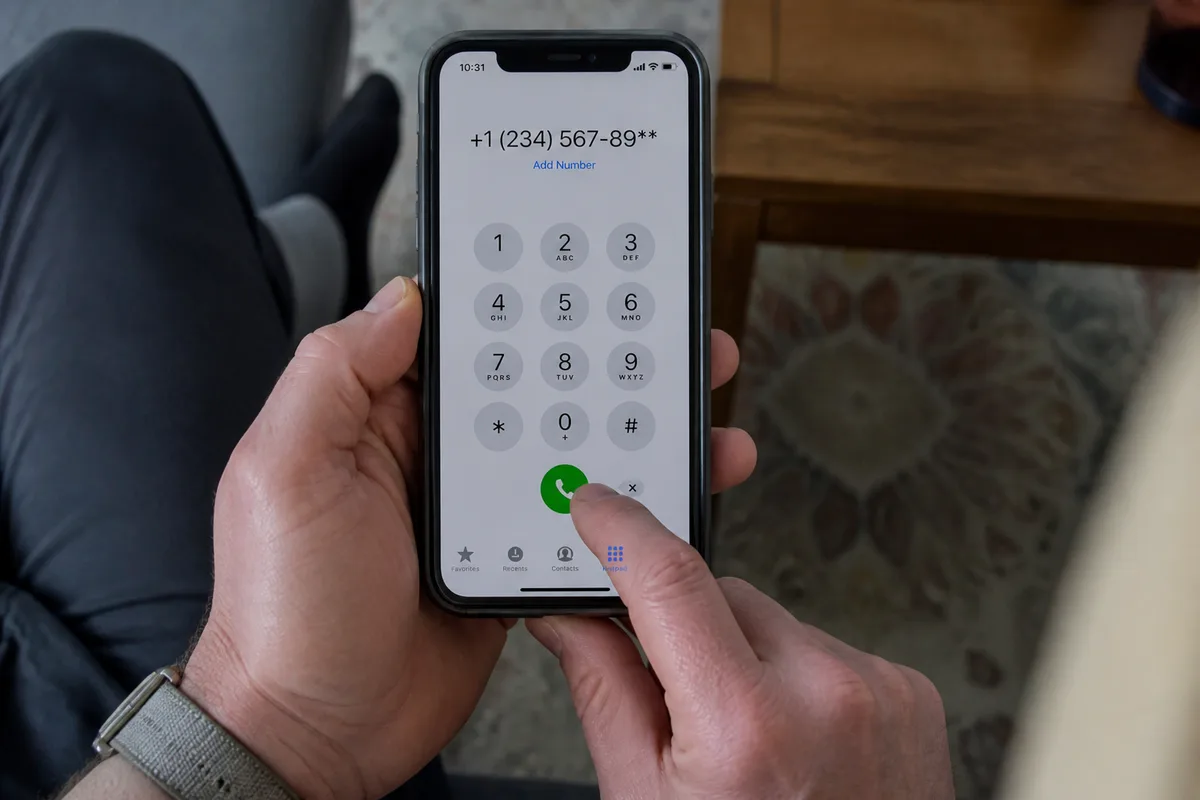
To call another country from a US smartphone, press and hold 0 to enter the plus sign, then type the country code and destination number. A standard US landline normally uses 011 first. Carrier permissions, number type, current international call charges, and the phone system you use determine whether the call connects and what it costs.
Quick Facts
📱 Mobile formula: +, country code, and the destination number in international format.
☎️ Landline formula: 011, country code, and the destination number, unless the destination has a special rule.
💳 Before calling: check your carrier’s current rate, international-call permission, and number-type exclusions.
🌎 Key exception: Canada and many Caribbean destinations use country code 1, while Mexico mobile calls use +52 followed by 10 digits without an extra 1.
Use the right international dialing format from the United States
Or, the standard way to call abroad from the US is to enter + or 011, followed by the destination country code and local number. Mobile phones usually accept the plus sign, while conventional US landlines generally use 011. Destination-specific numbering rules can change how area codes, domestic prefixes, and mobile numbers are entered.
| Calling situation | Basic format | Important check |
|---|---|---|
| US smartphone | + country code + destination number | Press and hold 0 for +. |
| US home landline | 011 + country code + destination number | Some destinations require an area or regional code. |
| Canada or many Caribbean destinations | 1 + area code + local number | Confirm the destination’s current North American numbering rule. |
| Mexico mobile | +52 + 10-digit number | Do not add an extra 1 after 52. |
Calling a mobile or landline from a US smartphone
Press and hold the 0 key until the plus sign appears, then enter the country code and the complete international number. Saving overseas contacts in plus format prevents repeated reformatting when you call from a different US network or supported calling feature.
Or, a local business card may show a domestic number that only works inside its country. The displayed number can include a trunk prefix, area code convention, or extension that must be handled according to the destination’s numbering plan.
Calling from a US home landline
Dial 011 first from a standard US landline.
After 011, enter the destination country code, then the area, city, regional, or local number required by that country. A home phone may also have a carrier-level international block, so a correct format can still fail before the call reaches the foreign network.
Or, the generic pattern is only a starting point. Country codes, area codes, mobile formats, toll-free numbers, and special-service numbers follow destination-specific rules rather than one universal pattern.
Build the number before you place the call
Or, prepare the number in advance by confirming the country code, identifying the number type, and checking whether a domestic trunk prefix must be removed. The reliable sequence is to verify the destination format first, apply the mobile or landline access method second, and inspect every digit before pressing call.
-
Confirm the destination country
Use an official numbering authority, a carrier reference, or the recipient’s internationally formatted contact details. Record the country code separately from the local number.
-
Identify the number type
Check whether the destination is a geographic landline, mobile number, toll-free service, premium-rate number, short code, satellite line, or business switchboard.
-
Apply the access method
Use plus, country code, and destination number on a mobile phone, or 011, country code, and destination number from a standard US landline.
-
Check the local format
Remove a leading domestic trunk prefix only when the destination numbering plan says to omit it. A zero is not automatically removed from every foreign number.
-
Save and test the contact
Save a frequent overseas contact with plus notation, then place a short test call before relying on the number for an urgent conversation.
Country rules decide how local prefixes are treated. A leading zero may belong to domestic dialing only, or it may remain part of the international number, depending on the destination.
Or, use an illustrative placeholder rather than copying a real private number into a public example. A mobile template looks like + [country code] [international destination number]; a landline template from a US home phone looks like 011 [country code] [destination number].
Check whether the recipient uses a mobile, landline, toll-free line, premium service, or short code. Special numbers may reject international calls or use a separate price category, even when an ordinary geographic number in the same country connects normally.
Or, save recurring contacts with the plus sign and country code. That format is more portable than a domestic version tied to one country’s network.
Call overseas from a smartphone without confusing Wi-Fi and cellular service
Or, a smartphone can place an international call through the carrier’s voice service, a supported Wi-Fi calling feature, or an internet calling application. The plus sign is usually the simplest mobile access method, while the billing route depends on the carrier, account, destination, number type, and application used.
Regular cellular and Wi-Fi calling
Wi-Fi calling can improve connection availability where cellular reception is weak. Wi-Fi access alone does not make a regular carrier international call free.
Carrier terms determine how a call is billed when Wi-Fi calling uses your ordinary mobile number. Check the carrier’s international calling page and account settings before dialing, especially when the call is long or the destination is a mobile number.
Or, verify signal strength, Wi-Fi stability, international permission, and any emergency-address requirement attached to the calling feature. A workplace, prepaid account, parental-control setting, or carrier restriction can block the call even when the phone shows a strong internet connection.
Internet calling apps
App-to-app calling can suit two people who have compatible accounts and reliable internet access. An application may not reach an ordinary phone number unless the service supports that route and the account has the necessary calling credit.
Check the app’s account setup, privacy permissions, data use, recipient availability, and displayed price before starting. Internet calls can also experience poor audio or interruptions when the connection is unstable; the exact behavior depends on the service and network.
Or, Google Voice states that an international call from the United States uses its international rates when a US phone number calls an international phone number. Google Voice should display the cost or confirm that the call is being routed through Google Voice; if that confirmation does not appear, the mobile carrier may handle the call instead.
Call abroad from a landline, office phone, or hotel phone
Or, a standard US landline usually begins with 011, while an office, hotel, residence, or managed phone system may require an outside-line prefix, authorization code, or operator assistance first. A failed 011 attempt can therefore indicate a local phone-system restriction rather than an incorrect country code.
Office and business phone systems
Ask the phone administrator whether international dialing is enabled and which route is authorized. Some business systems require an outside-line digit before 011, while others require an account code or block international calls entirely.
Or, workplace billing may attach the call to a department, extension, project code, or individual account. Confirm permission and billing responsibility before placing a long call from a shared desk phone.
Hotels and other shared landlines
Read the property’s dialing instructions before entering 011. Hotel room phones can apply separate connection fees or per-minute charges that are unrelated to your personal mobile plan.
Check whether the phone reaches an operator, outside line, or front desk first. A hotel phone may also block international destinations or require the operator to connect the call manually.
Or, do not assume that a room phone follows the same rules as a personal US landline. Ask for the exact prefix and billing method before connecting.
Check international call charges and choose the right calling method
Or, international call charges vary by carrier, destination, number type, plan, and connection method. Compare the complete route before calling: a standard carrier call may reach an ordinary foreign number directly, while an app may require compatible accounts, data access, calling credit, or a supported destination.
| Method | Useful when | Check before calling |
|---|---|---|
| Carrier voice call | You need to reach a normal mobile or landline number. | Destination rate, plan coverage, international block, and number type. |
| Wi-Fi calling | You need your ordinary mobile number where Wi-Fi is stronger than cellular service. | Carrier billing terms, account permissions, and connection stability. |
| Internet calling app | Both users have compatible accounts and dependable internet access. | Privacy permissions, data use, calling credit, and recipient availability. |
| Monthly international add-on | You make frequent calls to destinations included in the package. | Eligible plan, covered countries, exclusions, renewal, and cancellation terms. |
| Local SIM or eSIM | You stay abroad long enough to need local voice or data service. | Unlocked device, local availability, identity requirements, and voice coverage. |
“International call charges vary by country and provider, so verify the applicable procedure and price before dialing.” — Federal Communications Commission consumer guidance
The Federal Communications Commission advises consumers to compare international plans, prepaid calling options, and internet calling services rather than assuming one method fits every destination. A historical FCC comparison used rates posted in September 2020, so those figures should not be treated as current prices in 2026.
“A provider’s starting rate is an entry point, not a guaranteed final price for every destination, plan, or number type.”
Provider examples illustrate why checking conditions matters. AT&T lists a package at $15 per month per device for eligible postpaid wireless plans, with unlimited calling from the US to over 85 countries and discounted rates to over 140 others; verify current eligibility and country lists directly with AT&T.
Verizon lists pay-per-minute international calling from $0.49 per minute and says its service can call over 220 countries, subject to destination and account conditions. Verizon also states that certain destination permissions require an account active for 34 days and in good standing; confirm the current rule before relying on it.
Or, the right choice follows the actual route. A carrier call suits a recipient with an ordinary phone number, while an app suits two users with compatible accounts and dependable internet access.
Avoid surprise charges before dialing
Open the carrier’s current international rate page and check the account’s international calling status. Verify the destination, number type, covered countries, spending limit, and any international calling block.
- Check the current rate for the exact country.
- Confirm whether mobile and landline destinations have different prices.
- Look for toll-free, premium, satellite, maritime, or short-code exclusions.
- Verify whether a monthly add-on renews automatically.
- Confirm the app’s calling credit or displayed per-minute price.
Compare carrier calls, Wi-Fi calling, and calling apps
Carrier voice calls reach ordinary phone numbers but may create international charges. Wi-Fi calling can use the same carrier number and remains subject to the provider’s international billing terms.
App-based services can reduce the need for carrier voice routing when both users have compatible accounts. Privacy permissions, data use, reliability, and the ability to reach a normal phone number still require a separate check.
Or, choose a local SIM or eSIM only after confirming that the device is unlocked and compatible with the destination network. An eSIM is a SIM delivery method, not automatically an international calling plan.
Fix an international call that will not connect
Or, start with the number format before changing services. The common causes are an incorrect country code, an unedited domestic trunk prefix, a missing digit, an account restriction, an unsupported number type, or the wrong access method for the phone being used.
Number-format errors to rule out first
Recheck the country code, area code, national number length, and leading domestic zero. Ask the recipient to send the number in full international plus format when possible.
- Confirm the destination country code from an official or carrier reference.
- Compare the number with the destination’s mobile or landline pattern.
- Check whether a local trunk prefix must be removed.
- Remove an extra mobile prefix when the destination rule excludes it.
- Confirm that the line accepts calls from outside the country.
Or, Mexico mobile calls from the US use +52 followed by the 10-digit number, including the area code, without an additional 1 after 52. Canada and many Caribbean destinations use country code 1 with the relevant area code and local number, while other destinations require their own country-specific treatment.
Account and connection issues
Confirm that international dialing is enabled and that the call is not blocked by a workplace, hotel, prepaid, parental-control, or carrier setting. Check account balance or plan status before trying a second route.
Google Voice users should open or restart the application and confirm that sufficient calling credit is available when the service requires it. If the expected Google Voice cost or routing confirmation does not appear, stop before speaking for several minutes and check whether the mobile carrier may bill the call.
Or, retrying the same incorrectly formatted number will not solve a destination-specific dialing rule. Test plus on a mobile phone or 011 on a standard US landline, then verify the recipient’s number and the carrier permission.
Frequently Asked Questions About Calling Abroad From the US
Can I use the plus sign when calling abroad from the US?
Yes. Mobile phones generally accept the plus sign as the international access symbol instead of 011. Press and hold 0 on most smartphone dial pads, then enter the country code and international destination number.
What is the US international dialing code?
The standard international access code for a conventional US landline is 011. Mobile phones usually use +, which replaces 011 in the international dialing sequence.
Do I remove the first zero from an international phone number?
Only when the destination’s numbering plan says that the zero is a domestic trunk prefix omitted for international calls. Do not remove every leading zero automatically; check the country-specific mobile or landline format.
Is Wi-Fi calling abroad free?
No automatic free price applies. Wi-Fi access does not decide how a regular carrier call is billed, so check the provider’s international terms, destination rate, and plan coverage before calling.
How can I avoid unexpected international call charges?
Check the current carrier rate, plan coverage, number-type exclusions, international calling block, and account balance before dialing. If an app is used, confirm its displayed price and verify that the call is actually routed through that service.
Call Checklist
- 📞 Use + on a mobile phone or 011 on a standard US landline.
- 🌍 Add the correct country code and destination number.
- 🔎 Check whether the destination removes a domestic trunk prefix.
- 💰 Verify the current charge, plan coverage, and number-type restrictions.
- 🛠️ If the call fails, check formatting, permissions, account status, and connection quality.
Final checklist before you call another country
Or, confirm the country code and the recipient’s full international number before pressing call. Use plus on a mobile phone or 011 on a standard US landline, then apply the destination’s specific numbering rule for the area code, mobile prefix, or local number.
-
Verify the country code
Use an official numbering reference, carrier page, or internationally formatted contact supplied by the recipient.
-
Format the number
Apply + or 011, then check the destination’s rule for domestic zeros, regional codes, and mobile numbers.
-
Check the calling route
Confirm carrier permission, Wi-Fi calling terms, app routing, account balance, or the phone system’s outside-line instructions.
-
Review the price
Check the current international rate, covered destinations, number-type exclusions, and any add-on renewal condition.
International calling also depends on the destination’s local time and the recipient’s opening hours. For travel-related phone use, review these ways to call home while travelling and check roaming terms before leaving the United States.
Or, ask the recipient to resend the number in international plus format if one digit or prefix remains uncertain. A successful overseas call comes down to verifying the format, the permitted route, and the price before dialing, especially if 1 detail remains uncertain.