2 practical drawbacks decide whether an eSIM is worth switching to: limited compatibility and a less independent recovery process when a phone fails. An eSIM can simplify travel and dual-line use, but a physical SIM remains easier to move between compatible phones without carrier approval or a fresh digital activation.
An eSIM is a carrier-issued digital subscriber profile installed on compatible hardware, not a separate mobile network. Coverage, speed, call quality and battery life still depend on the device, plan, carrier network and local conditions.
Quick facts
📱 Compatibility is conditional: check the exact phone model, regional version, carrier and plan before switching.
🔁 Phone transfers can require carrier involvement: a new QR code, account verification or support request may replace a simple card swap.
✈️ Travel eSIMs need checking: verify unlocking, network coverage, hotspot rules, data limits and activation access before departure.
🛡️ Security is not automatic: device locking and carrier-account protection remain essential with either SIM format.
What an eSIM changes — and what it does not
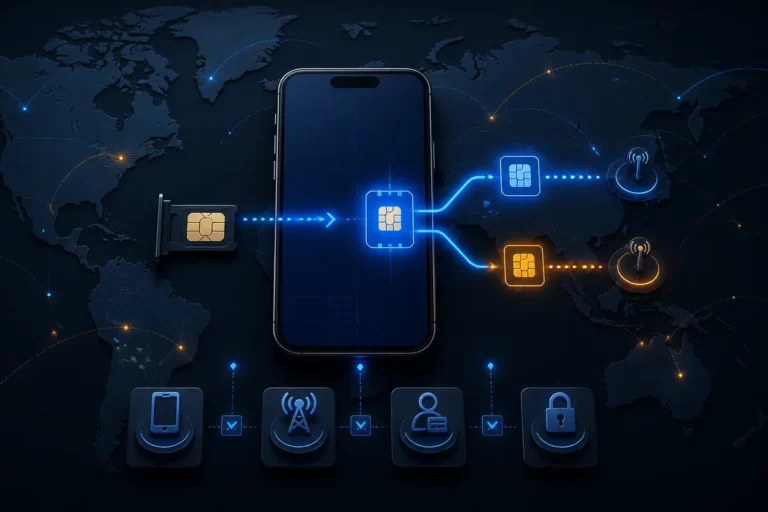
Or an eSIM changes how a carrier profile reaches the phone, while leaving the mobile network itself unchanged. The carrier still controls eligibility, activation, suspension, replacement and transfer rules. A physical SIM is removable; an eSIM normally requires an on-device or carrier-managed migration process.
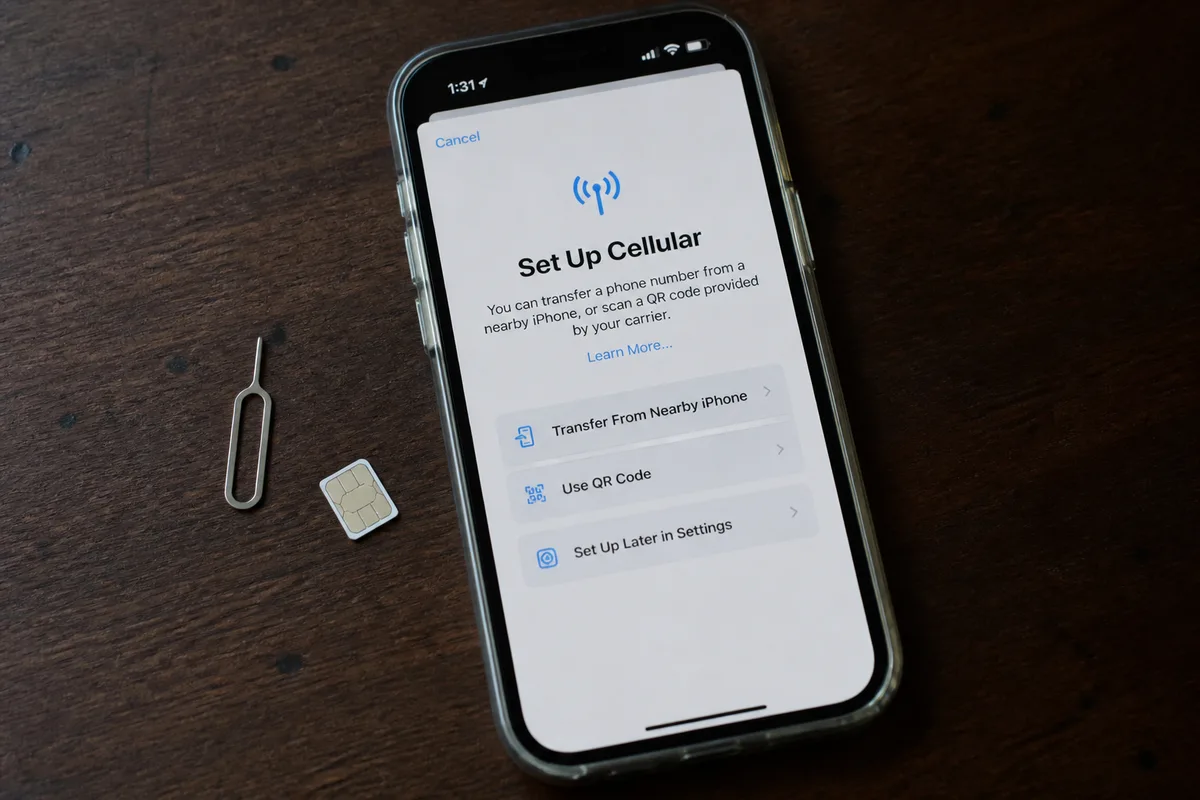
An eSIM is a digital subscriber profile installed in compatible phone hardware. It does not create a new signal source.
Neither SIM format inherently improves coverage, data speed, call quality or battery life. Those results follow the phone's radio hardware, the selected plan, the connected network and conditions at the location where the device is used.
Or the carrier remains part of every important step. A provider can restrict eligible plans, require identity verification, issue a replacement profile or limit how a QR code is reused.
eSIM versus physical SIM at a glance
Or the practical difference is simple: a physical SIM can usually be removed and inserted into another compatible phone, while an eSIM profile normally travels through a digital transfer workflow.
| Feature | eSIM | Physical SIM |
|---|---|---|
| Provisioning | Downloaded or activated on compatible hardware | Inserted as a removable card |
| Phone transfer | May require carrier approval, an app or a new QR code | Often involves moving the card to another compatible device |
| Compatibility | Depends on the exact device, regional model, carrier and plan | Requires a matching physical slot and card size |
| Network performance | Determined by the phone, plan and network | Determined by the phone, plan and network |
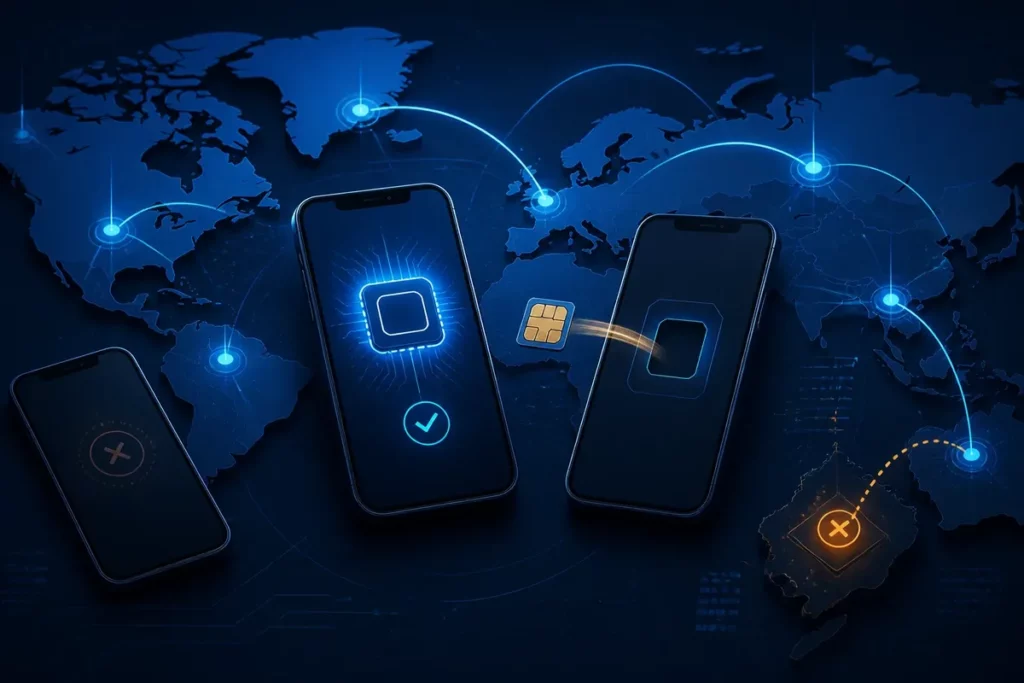
Modern phones may support eSIM only, physical SIM only, or a combination of both. Regional versions can differ even when the product name is identical.
Or check the manufacturer's specification for the exact model number, not just the retail name.
The eSIM disadvantages that matter in real life
Or the main eSIM disadvantages appear when a user changes phones, loses access to the original device or needs service outside the carrier's normal activation flow. Compatibility, account access, internet availability and provider support can all become part of a task that a physical card handles more directly.
An eSIM can remove the card from the process without removing the carrier from the process.
A damaged or erased phone can turn a quick SIM swap into an account-recovery problem. The replacement process may require a carrier app, a fresh QR code, identity checks or customer support.
Or deleting an eSIM profile does not cancel the mobile contract. It can remove the local information needed to reconnect before the carrier issues another profile.
Older devices, imported models and backup handsets can also reduce flexibility. The phone may support a physical SIM while lacking eSIM support, or the carrier may support eSIM only on selected plans.
Before resetting the old phone, confirm that calls, texts and mobile data work on the intended device.
Factory-reset protection and cloud backups do not guarantee that a working mobile line will return automatically. The carrier's transfer and recovery rules control that outcome.
Or separate technology limits from carrier restrictions such as transfer caps, QR-code reuse rules, replacement charges and support availability.
Why phone changes are the biggest friction point
Or a physical SIM can often be tested immediately in another compatible handset, whereas an eSIM transfer may need a connected account and carrier-side provisioning.
That difference matters most when the original phone is broken, lost or unable to display an activation code. A new phone may also require a different transfer method because the operating system, model or carrier workflow has changed.
Do not erase the old phone first.
Confirm the new line works before trade-in, repair shipment or factory reset.
When activation problems become urgent
Or activation becomes urgent when the phone needs internet access, account verification or carrier approval before it can connect to the mobile network.
A traveler who arrives without Wi-Fi may struggle to download a new profile. A user with a lost phone may also lose access to the email address, authentication method or account credentials required for recovery.
Keep the carrier account password, account PIN and support route available.
A second connection, such as trusted Wi-Fi or another working phone, can make recovery possible.
eSIM vs physical SIM: convenience depends on the scenario
Or eSIM convenience is strongest when the phone stays in one person's hands and the carrier supports smooth digital transfers. Physical SIM benefits become more important when immediate portability, backup-phone access or independent troubleshooting matters more than travel convenience.
| Scenario | More practical choice | Reason | Check before deciding |
|---|---|---|---|
| Frequent phone changes | Physical SIM | Fast card movement can avoid a carrier transfer workflow | Card size and device slot |
| Travel data line | eSIM | A separate plan can be added without replacing the main card | Unlocking, coverage, roaming and hotspot terms |
| Dual-line use | Either format | Both can support dual-SIM arrangements on compatible phones | Regional model and simultaneous-line limits |
| Broken primary phone | Physical SIM | A surviving card may work in a compatible backup phone | Backup handset compatibility |
| Lost phone | Neither automatically wins | Recovery depends on account security and carrier replacement rules | Suspension and replacement procedure |
Travel can favor eSIM when the device is unlocked and the travel plan's coverage and terms are clear. A local physical SIM may offer better value for a longer stay, while a travel eSIM may reduce the need to find a store immediately after arrival.
Compare the itinerary, not the coverage headline. Check the network at the airport, border crossing, rural stop and final destination.
Or an eSIM does not guarantee hotspot access, local calling or full-speed data. Those functions belong to the travel plan's conditions.
The comparison criteria that should decide the switch
Or four criteria usually settle the choice: portability, exact compatibility, travel-plan conditions and carrier support quality.
Advantages
- Add a supported travel or work line without handling another card
- Use dual-SIM functions on compatible hardware
- Keep a physical slot free when the regional model allows it
- Reduce reliance on a removable card during normal use
Disadvantages
- Depend on exact device and carrier compatibility
- Require digital transfer or replacement procedures
- Need account access and connectivity during activation
- Can limit recovery on older or backup phones
Security also needs a precise comparison. An eSIM is harder to remove physically after theft, yet account takeover, weak device locking and unsafe provider-app permissions remain relevant risks.
Or use a physical SIM when rapid independent recovery is your priority.
Who should switch to eSIM — and who should keep a physical SIM
Or eSIM suits users with a recent supported phone, stable carrier support, infrequent phone changes and a clear need for dual lines or travel data. A physical SIM suits frequent device changers, backup-phone users and anyone who values self-service recovery without waiting for a new digital profile.
Choose eSIM here, not physical SIM: a supported phone used for regular travel and a second data line.
Choose physical SIM here, not eSIM: a user who changes phones more than once a year or keeps an older backup handset.
Or the best format can change after a move, a new phone purchase or a carrier change.
Good reasons to choose eSIM
Or eSIM is a strong fit when digital flexibility solves a real task rather than replacing a perfectly workable card.
- Add a travel or work line without opening the phone.
- Keep the main number active while using a separate data plan.
- Use dual-SIM features on a supported regional model.
- Avoid carrying a tiny removable card during normal use.
Travelers should inspect the plan before departure. The steps for setting up an eSIM before travel are only useful when the phone is unlocked and the plan permits activation in the destination country.
Good reasons to retain a physical SIM
Or a physical SIM remains practical when a fast device swap matters more than remote provisioning.
- Move service quickly between compatible phones.
- Keep a tangible fallback for troubleshooting.
- Use an older or region-specific backup device.
- Avoid dependence on a carrier-specific transfer workflow.
International users should also compare local SIMs, travel eSIMs and roaming charges. The local SIM versus eSIM versus roaming comparison is useful only after checking the actual destination network and plan conditions.
How to switch without losing service
Or switch only after confirming the exact phone model, regional version, carrier, plan and recovery process. The safe order is to preserve the existing line, prepare account access, activate the new profile, test every essential service and remove the old connection last.
-
Check the device
Confirm eSIM support for the exact model number and regional version, not merely the product family.
-
Check the plan
Ask the carrier whether the current plan supports activation, transfer and replacement through eSIM.
-
Prepare recovery
Keep the account password, PIN, recovery email and carrier support route available before starting.
-
Connect reliably
Use trusted Wi-Fi or another working connection if the activation process requires internet access.
-
Test the line
Check calls, texts and mobile data on the intended phone before deleting the old profile or discarding the physical card.
Or retain the old profile until the new line has passed those tests.
A safe pre-switch checklist
Or five checks prevent most avoidable interruptions during a format change.
- Device compatibility confirmed.
- Plan and transfer eligibility confirmed.
- Account recovery method available.
- Internet connection ready.
- Existing service retained until testing is complete.
Keep the carrier's current instructions because software and policy updates can change the transfer path.
Or if the carrier cannot explain replacement after loss or reset, keep the physical SIM.
eSIM disadvantages: common questions answered
Or eSIM reliability, transferability and travel value cannot be judged from the embedded format alone. The device, carrier, plan and provisioning process decide what the user can actually do.
Is eSIM less reliable than a physical SIM?
No SIM format is automatically more reliable. A working eSIM profile and a working physical SIM can both provide the same carrier service when the phone, plan and network are functioning.
Or failed provisioning creates a different type of problem from a damaged card.
Can an eSIM be moved to a new phone?
Often, yes, but the method depends on the carrier, device platform, plan and verification requirements. A transfer may require a new QR code, a carrier app or customer support.
Or a physical SIM usually offers the faster independent swap.
Does eSIM reduce coverage or data speed?
No. Coverage and speed come from network conditions, plan rules, device radio capabilities and the connected carrier network rather than the SIM format alone.
Or look at the network at the destination, not the SIM label.
What happens if a phone with an eSIM is lost or reset?
Secure the carrier account, suspend service when necessary and follow the carrier's replacement process. A cloud backup may restore phone data without restoring a working mobile profile.
Or recovery requires a verified route back to the carrier.
Is eSIM better for international travel?
An eSIM can simplify adding travel data, but the phone must be compatible and unlocked, while the plan's coverage, roaming terms, hotspot rules and activation conditions need checking.
Or a local physical SIM can be more practical for a long stay or an unsupported phone.
Can I switch back to a physical SIM?
Usually, the carrier and plan must allow the change. The provider may require verification, a replacement card or a new activation process, and any charge or timing must be confirmed directly.
Or ask about the reverse transfer before converting.
What to remember
- 📱 eSIM compatibility belongs to the exact device, regional model, carrier and plan.
- 🔁 Physical SIMs remain easier for immediate transfers between compatible phones.
- 🌐 Activation may require Wi-Fi, account access, verification or a new carrier-issued profile.
- ✈️ Travel value depends on destination coverage, unlocking, roaming terms and data conditions.
- 🛡️ Strong account protection matters with both SIM formats.
Switch to eSIM when supported digital flexibility matches your habits, and keep a physical SIM when rapid independent recovery matters most, especially if you change phones more than 1 time a year and the carrier cannot confirm the replacement process.
Frequently Asked Questions
Or these short answers separate eSIM technology from the carrier and device rules that control the result.
Is an eSIM less reliable than a physical SIM?
No. Reliability depends on successful provisioning, the phone, the plan and the carrier network. A physical SIM can be easier to move during a device failure.
Can an eSIM be moved to a new phone?
Often, yes, but the carrier may require a new QR code, an app, account verification or support contact. Confirm the transfer route before resetting the old phone.
Does an eSIM reduce coverage or data speed?
No. The SIM format alone does not reduce coverage or speed. Network conditions, plan rules and device radio hardware determine performance.
What happens if I lose a phone with an eSIM?
Secure the carrier account and suspend service when necessary. The carrier's replacement process may require identity verification, a new profile and access to another internet connection.
Is eSIM better for international travel, and can I switch back?
An eSIM can simplify travel data, provided the phone is compatible and unlocked and the plan covers the destination. Switching back to a physical SIM is possible only when the carrier and plan allow it, with timing and charges confirmed before conversion.